
Los Angeles
March 2026
Written by
Alex Yang
NIGHTS AT
THE EMO CIRCUS
An Ode to A Fever You Can't Sweat Out
21 years on since the release of Panic! at the Disco’s debut album, and I still haven’t sweat out the fever of the eclectic aesthetic amalgamation of 2000s emo pop, dance beats, and Vaudevillian theatrics that has permanently infected my brain and changed the way I think about music forever.
A Proper Introduction
Two days before Panic! at the Disco was set to take the headlining stage at 2025’s iteration of the When We Were Young festival for their first hometown show in three years, I impulsively dropped the $328 on a resale ticket for the opening night. For the entire year since the festival lineup’s announcement, I had been trying to talk myself out of going, and I was largely successful.
However, after going through a bout of repeatedly rewatching Panic!’s entire Live in Denver performance on YouTube, I decided I had to be there. I had previously seen Panic! live twice at the peak of my middle school emo phase, but this Vegas show would be different. For the first time since touring to promote its release, they would be performing the album A Fever You Can’t Sweat Out in its entirety.
If you asked me, gun to head, who my favorite artist or what my favorite song of all time is, I’d choose death. I can’t choose a single answer for either question, and just trying to think of one that could reasonably pass is stressful. But for my favorite album of all time, I can confidently say Fever is number one. I genuinely would not be the person I am today without it.
Discovering this album in 2016, the summer before sixth grade, not only kickstarted my emo phase but also led to music becoming a fundamental part of my identity. I was enamored by the moody and clever lyricism of Ryan Ross, the incredible layered instrumentation, Brendon Urie’s dramatic vocal performance, and a theatrical aesthetic that tied everything together.
Craving more of this tasteful blend of introspection, melodrama, mild swagger, and catchy melodies led me down the rabbit hole of emo pop canon that defined the adolescence of many others in the opening two decades of the century. My Chemical Romance, Fall Out Boy, and Twenty One Pilots followed Panic! on my newly constructed Spotify playlists. While I had always enjoyed listening to music, I started becoming a true fan, learning the lore and history behind my favorite bands.
I had been taking drum lessons for three years with mild enjoyment prior to my emo awakening. But Fever inspired me to truly master musical performance. I started teaching myself the drum parts to my favorite songs, intently studying each intricate fill and well-timed cymbal hit. For the subsequent few Christmases, I begged for a bass, an electric guitar, and any other tools I could use to broaden my musical horizon. I needed to — and eventually did — play in at least one band by the time I graduated high school to keep up with my Panic! idols.
In little time, music began to constitute a core component of my life. I not only taught myself various instruments and music theory, but also began teaching music lessons. I started priding myself on the music I listened to, displaying my favorite artists proudly by wearing merch almost every single day of the week. Attending concerts became a norm for me — I almost skipped my high school graduation for one, and my parents were fine with that. That was just what I did. I learned more about the music industry and the processes that shape how and why we listen to the music that we do, and was admitted to UCLA under the music industry major. Today, I intern at an independent record label started by Gabe Saporta of Cobra Starship.
If I had never found Fever back in sixth grade though, who knows if my life would’ve led me down this path.
Strike Up The Band
It was one singular cold DM that changed the trajectory of my life, and it wasn’t even sent by me. Some time in 2004, while the band was still in high school, Panic! guitarist Ryan Ross sent a demo via LiveJournal to Fall Out Boy bassist and leader Pete Wentz. Impressed, Wentz drove to Vegas to meet the band and ended up signing them to his record label Decaydance. After graduating the following year, the band was shipped off to a studio in Maryland to begin work on A Fever You Can’t Sweat Out.
The band arrived at the studio with about half of the songs fully written. They then had just three weeks to finish the album, working the members to the point of near-insanity and nearly collapsing the project altogether.
In the studio, the band went through what producer Matt Squire described as an identity crisis, as their songwriting style evolved as they wrote new songs. The songs they brought to the studio were inspired by their pop punk roots (Panic! started as a blink-182 cover band), with an added electronic flair. The syncopated, jagged guitar riffs were complemented by drum machine dance breaks, hooky synth lines, and archetypal whiny emo vocals complaining about cheating girlfriends, unstable home lives, and hating the media.
The new songs written during the production process, however, became more ornate and theatrical. The band started experimenting with unconventional song structures and incorporated baroque instrumentation, with strings, brass, organ, and accordion enriching the distorted rock operas. Lyrics, while still inspired by their lived experiences, became more conceptual, transporting listeners to a fictional scene, introducing them to characters, and airing their dirty laundry. At first, the band was hesitant to include this new sound, but Squire convinced them that it would show the album’s creative evolution and tell the story of the band.
This decision to frame the album in this manner contributed to its groundbreaking nature and eventual impact. Both halves of the album, separated by a fun interlude track entitled “Intermission,” had unique, fresh sounds in their own right, but the marriage of everything on one project created the most ambitious debut album in the emerging emo pop scene and a result infinitely greater than the sum of its parts, as reflected by the parity of quality between each song.
Keep Up With These Fashionistas
After its release on September 27, 2005, Fever almost immediately became a huge hit, and Panic! instantly joined the pantheon of mid-2000s emo legends (don’t ask Pitchfork what they thought, though). The rapid success of the band led to one major problem when it came time to promote the album though: they had almost zero experience as a live band but were slated to enter a year-long international touring cycle, including two headlining tours. Luckily, the band was able to evade any expected shortcomings, thanks to Ryan Ross’s visionary creative direction and Pete Wentz’s ever-expanding pockets.
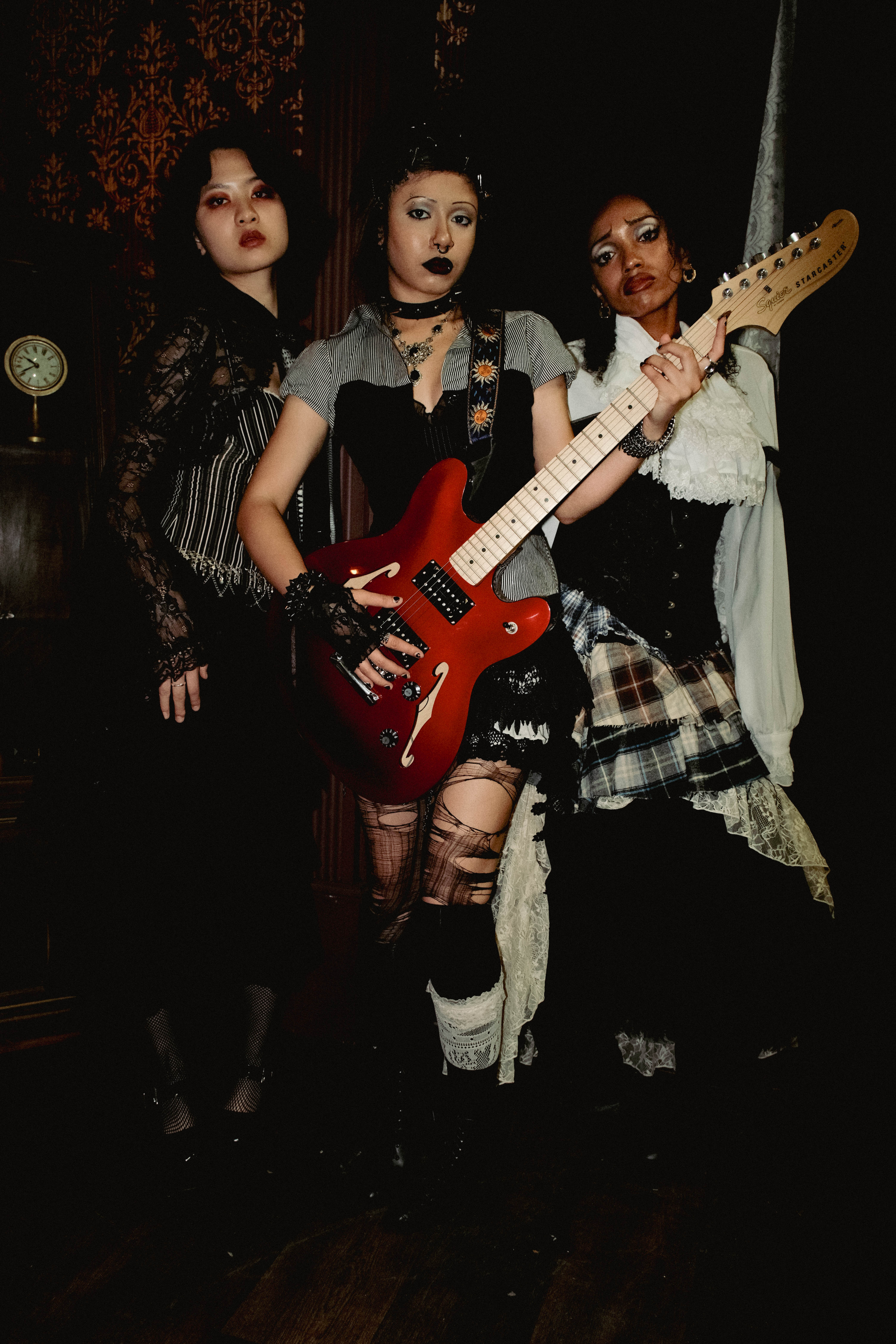
Panic! embarked on their first unnamed headlining tour in the summer of 2006, after months of opening for multiple other emo bands, and used their full stage to dial up their eclectic aesthetic to 11. If critics thought the Victorian imagery and Baroque instrumentals were just a gimmick, they became a fundamental part of Panic!’s identity during this tour. The band donned themed costumes and makeup every night, and even their instruments were meticulously chosen to match the tour’s visual branding. If that wasn’t enough, the band was joined by a full Vaudevillian circus troupe, showing wholly that all the burlesque stuff wasn’t a bit.
In addition to accentuating the whimsical music, the circus performers played a crucial role in allowing Panic!’s set to feel like a bona fide headlining show. Fever’s run time is less than 40 minutes, so the incorporation of the circus performers’ dance routines and intermission skit, plus a couple of covers played by the band, helped pad the show’s length and allowed for it to become a grandiose production.
During the Denver stop of the tour, the band recorded their entire set and eventually released the footage on DVD as Live in Denver in a limited edition box set. This recording would capture some of the only high-definition evidence of the tour’s genius execution and immortalize this era of Panic!. There exists no more iconic of a live show in the Panic! canon than this one, and it helped connect subsequent generations of Panic! fans who were far too young to attend in person (including yours truly!) to this stage of their artistry.
After taking their talents across the pond in the fall of 2006, Panic! returned stateside and somehow ramped up the theatrics even further for the second American leg of the tour, which would finally be given a name: The “Nothing Rhymes With Circus” Tour. Once again joined by a different set of circus performers, the band went bigger in every aspect. Now playing in larger arenas, the stage was adorned with a giant circus tent and featured drummer Spencer Smith placed upon a towering carousel-shaped riser. Rather than a digital screen, the band opted for a Victorian-esque wallpaper, evoking a vibe more akin to a Broadway musical than a modern concert. The band’s wardrobe and makeup became even more elaborate, and the circus performers were presented as anything from clowns to puppets to a bride and groom.
Time To Dance
20 years since the “Nothing Rhymes With Circus” Tour concluded, the magnificence of A Fever You Can’t Sweat Out’s live shows remains unmatched. A band in the infancy of their career combining emo music with electronic synth and drum machine elements, live orchestral instrumentation, Victorian visual elements, and an entire fucking circus troupe would be considered groundbreaking even today.
Watching Live in Denver for the first time back in middle school altered my perception of what a band could do when given the opportunity to use a stage to its maximum potential. Even when I revisit that old footage 10 years later, I’m still awed that a group of 19 and 20-year-olds was able to pull that off to such a high degree of competence.
I, along with tens of thousands of other Panic! fans, flocked to Vegas at the tail end of last year, guided by high hopes of experiencing just a fraction of the same magic that imbued the “Nothing Rhymes With Circus” Tour.
Truthfully, many of us in that crowd had somewhat dim expectations, though. After Fever, Panic! continuously metamorphosed into various distinct eras, each with drastically different sounds, aesthetics, and identities, and none of them remotely alike to the debut record, to the chagrin of many. Whether or not they were fans of the other Panic! iterations, all could agree that the 2025 Panic! was not the same as the 2006 Panic! that put on such a memorable and influential production.
Most notably, there was significant discourse on who Panic! at the Disco even was in 2025. Since 2016, the name had been basically code for Brendon Urie’s solo project, as the other members progressively left the band. While writing the introductory paragraphs of this article, I was instinctively inclined to use “he” instead of “they” when referring to Panic! at the Disco, but opted to use the third-person plural form for the sake of clarity.
This made the prospect of playing Fever in its entirety a controversial subject, as the album is seen by fans largely as Ryan Ross’s project, having written all the lyrics and leading the creative direction. Rumors of a true reunion started circulating after it was announced that Panic! would be playing Fever, but most knew that it would be unlikely due to the strained relationship between Ross and Urie following Ross’s split from the band in 2009.
Nevertheless, when the countdown timer for Panic!’s When We Were Young set was displayed on the large digital screen, there was a palpable excitement that permeated the crowd. Even if there were unresolved questions and a looming fear of disappointment, it was truly going to be a once-in-a-lifetime event. So many fans had been yearning for any sort of return to the Fever era, even if just for a one-off performance.
When the radio static of “Introduction” blasted through the speakers, immediate chills ran down my spine, and when Brendon Urie finally graced the stage for “The Only Difference,” tears and severely out-of-tune screams followed. While Ryan Ross and the Lucent Dossier Vaudeville Cirque were nowhere to be found for the duration of Fever, it didn’t matter. For an hour, I got to experience an album that defined my life as if it were the first time again.
For the final song of the night, Panic! performed the biggest hit off Fever, “I Write Sins Not Tragedies,” for the second time, but with an added twist. Spencer Smith, one of the founding members of Panic!, took the drum set and joined Brendon on stage for the first time since 2013. While not a true redux of the roster that embarked on the “Nothing Rhymes With Circus” Tour, Spencer’s appearance more than satiated the desire for a reunion.
Spencer’s presence was more than just a cameo, though. It was a representation that the impossible was possible that night. For the decade since first hearing the album, I never expected that I would be able to witness the full work of art that is A Fever You Can’t Sweat Out performed live, front to back. Yet, the album that left an indelible mark on me as an emo 12-year-old once again found a new way to shape my brain chemistry via the most unforgettable live performance of a masterpiece that now encapsulated my own identity.
© Forward 2026
"For the Future"